Making It Up As We Went Along
Making It Up As We Went Along
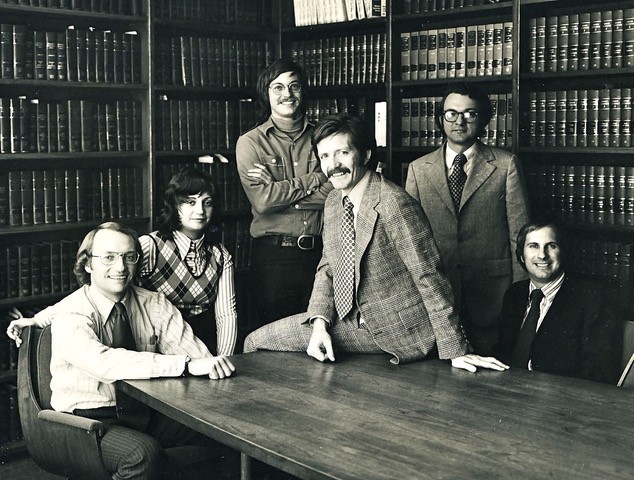
CLIPI staff in 1973
CLIPI staff in 1973
When we started CLIPI in 1972, there was no model. There were no public interest law firms in Los Angeles and only a handful emerging in the country, mostly in New York and Washington.
Nobody had figured out how to do what we were trying to do.
My co-founders and I left O'Melveny & Myers, which at the time had only about 100 lawyers.
We had to figure out everything from scratch. Where does the money come from? What kind of cases do you bring? How many people do you hire? How do you interact with the courts and the political system?
The Ford Foundation initially turned us down. They'd already committed their West Coast funding to Public Advocates in San Francisco. We left our jobs anyway and started raising money locally. Six months later, Ford gave us our remaining start-up money.
We opened our doors in early 1972, and our first case was the Century Freeway litigation. It lasted 45 years.
The public interest groups on the east coast at the time were focused on national issues. We made a deliberate choice to focus on California law. That decision helped establish California as a model for environmental regulation, civil rights enforcement, and public interest litigation across the country.
There's still no single model for public interest law. But we proved that you don't need one to start.
Category
News
Written by

Carlyle W. Hall Jr.
Co-Founder, CLIPI
Published
Category
News
Written by
Carlyle W. Hall Jr.
Co-Founder, CLIPI
Published
Blog and articles
Latest insights and trends
Blog and articles